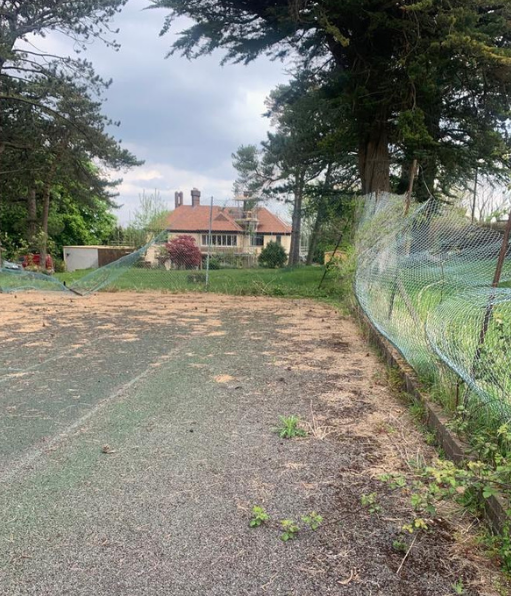
A high-quality tennis court depends on considerably more than the material visible beneath a player’s feet. The finished surface is only the uppermost part of a carefully constructed system, with ground preparation, formation levels, drainage, base construction and surface installation all contributing to how consistently the court performs.
If these underlying elements are poorly designed or constructed, even an attractive new surface can eventually develop problems. Uneven areas can affect ball bounce, inadequate drainage can leave sections wet for longer, and movement within the foundation can contribute to cracking, settlement or surface distortion.
Professional tennis court construction therefore starts below the playing surface. For projects in Surrey, UK, careful planning and installation can create a court that provides consistent levels, reliable drainage, appropriate playing characteristics and a strong foundation for long-term use.
Why Does Professional Tennis Court Construction Matter to Playing Quality?
The quality of a tennis court is influenced by how accurately every stage of construction is completed.
Players need a surface that is consistent across the court. The ball should not behave unpredictably because of dips, raised areas or changes in the underlying construction. The surface should also provide suitable grip and allow water to be managed effectively.
Achieving these characteristics requires the complete court structure to work together.
The Playing Surface Starts With the Ground Beneath It
It is easy to judge a tennis court by its final appearance, but the quality of the finished court begins much deeper.
Before the playing surface is installed, the existing ground needs to be assessed and prepared for the proposed construction.
The condition of the formation influences everything placed above it.
If unsuitable or unstable areas are ignored, movement can eventually affect the layers above. Correct preparation creates a more dependable starting point for the entire court.
Site Preparation Establishes the Foundation
Professional construction begins by preparing the site to receive the new court.
This involves creating suitable levels and ensuring the construction area provides an appropriate base for subsequent layers.
The objective is not simply to create a flat-looking piece of ground.
Preparation needs to take account of how the finished court will be supported and how water will move through or away from the construction.
Getting these fundamentals right at the beginning helps reduce the likelihood of problems becoming visible later.
Accurate Levels Are Essential for Consistent Play
A tennis court needs carefully controlled levels.
Even relatively small irregularities can influence how the playing surface feels and how the ball responds.
Low areas can also encourage water to collect, while raised sections may create noticeable changes beneath the player’s feet.
Professional construction uses controlled preparation and installation to establish consistent levels across the court.
The result is a more predictable playing environment.
A Tennis Court Should Not Simply Be Perfectly Flat
Although players naturally expect an even surface, a court also needs to manage rainfall.
This means the construction may incorporate carefully designed falls or drainage characteristics while still appearing and playing as an even surface.
The distinction is important.
A court can be visually level and comfortable to play on while still having the subtle construction characteristics required to manage water.
These details need to be established during the design and preparation stages rather than improvised after the surface has been installed.
Drainage Has a Major Influence on Court Performance
Water management is one of the most important aspects of tennis court construction.
A court that retains excessive water can remain unavailable for longer following rainfall and may develop persistent wet areas.
Effective drainage begins with understanding how water will interact with the complete court.
Depending on the surface and construction system, water may need to move through the surface, across controlled falls or into surrounding drainage arrangements.
The important point is that drainage should form part of the construction plan from the outset.
Poor Drainage Can Affect More Than Playing Availability
Standing water is not simply inconvenient.
Repeated moisture accumulation can expose certain parts of the court to conditions that differ from surrounding areas.
If one section regularly remains wet while another drains effectively, the surface may begin to perform inconsistently.
This is why drainage should be considered as part of overall court quality rather than an additional feature.
A well-planned court should manage rainfall in a controlled and predictable way.
The Sub-Base Provides Essential Support
Beneath the visible playing surface sits the structural foundation of the court.
A correctly prepared sub-base helps distribute loads and provides stable support for the construction above.
Its depth, material and preparation need to suit the particular court design and ground conditions.
Simply installing a high-quality surface over an inadequate foundation does not create a high-quality tennis court.
The layers beneath it must provide the necessary stability.
Compaction Helps Create a Stable Foundation
The materials used within the foundation need to be installed and compacted correctly.
Inadequate compaction can allow movement or settlement to develop after construction.
This may eventually appear at the surface as dips, unevenness or localised deformation.
Professional construction pays close attention to the preparation of each layer rather than relying on the final surface to disguise irregularities beneath it.
The smoother and more stable the foundation, the better the opportunity for the finished surface to remain consistent.
Each Construction Layer Has a Purpose
A tennis court is generally constructed as a system rather than a single layer of surfacing.
Different layers perform different functions.
Some provide structural support, others help establish accurate levels, and the upper layers provide the required playing characteristics.
The exact construction varies according to the court system being installed, but the principle remains the same: each layer needs to be compatible with those above and below it.
Weakness in one part of the system can eventually influence the complete court.
Surface Regularity Affects Ball Bounce
Consistent ball response is fundamental to tennis.
If the court contains depressions, raised sections or abrupt changes in surface level, the bounce can become less predictable.
Professional installation aims to create consistent surface regularity across the playing area.
This does not mean that every type of tennis court produces identical ball behaviour.
Different surface systems naturally have different playing characteristics.
What matters is consistency within the chosen system.
Consistency Matters Across the Entire Court
A court should not perform well only around the centre.
Baseline areas, service boxes and wider sections of the playing area all need appropriate construction.
Differences in foundation preparation or surface installation can create variations between sections.
Professional tennis court construction treats the playing area as one complete system.
This helps create predictable movement and ball response wherever play takes place.
Surface Choice Influences Playing Characteristics
Different tennis court surfaces can provide different characteristics.
The appropriate choice depends on how the court is intended to be used and the qualities required from the finished facility.
Surface texture, resilience, drainage characteristics and construction method can all influence play.
Professional court construction therefore involves more than simply selecting a surface by appearance.
The complete system needs to suit the intended use.
Grip Needs to Be Appropriate and Consistent
Player movement depends on the interaction between footwear and the court.
A suitable tennis surface needs to provide appropriate traction while remaining consistent across the playing area.
Variations caused by contamination, surface deterioration or uneven installation can affect how confidently players move.
Correct installation helps establish uniform surface characteristics from the beginning.
Ongoing maintenance can then help preserve them.
Surface Texture Can Influence Play
The texture of the finished court affects more than appearance.
It contributes to grip, ball interaction and the general feel of play.
A professional installation should create an even finish without unnecessary variations between sections.
Where coatings, aggregates or other surface components form part of the system, consistent application is important.
Poorly controlled installation can result in areas that behave differently from the rest of the court.
Accurate Court Construction Supports Predictable Movement
Tennis involves rapid acceleration, changes of direction and repeated movement across relatively small areas.
An uneven court can become noticeable very quickly during this type of activity.
Professional construction aims to eliminate unnecessary irregularities and create a consistent playing platform.
This allows players to concentrate on movement and shot selection rather than adapting to unpredictable areas of the surface.
Baseline Areas Need a Strong Construction
Certain parts of a tennis court experience particularly frequent use.
The baseline is an obvious example.
Players repeatedly accelerate, stop and change direction within these areas.
The underlying construction therefore needs to support repeated activity without developing premature localised deterioration.
A properly constructed foundation helps the court cope with these patterns of use more consistently.
Service Areas Also Experience Concentrated Activity
Service positions and common movement routes receive repeated foot traffic.
If the surface or foundation is inconsistent, these areas can begin showing deterioration earlier than less frequently used parts of the court.
Professional construction considers the court as a playing environment rather than simply a rectangular surfaced area.
The complete structure should be capable of supporting the way tennis is actually played.
Edge Construction Is Important
The perimeter of the court should not be overlooked.
Edges help define and support the overall construction.
Poorly formed or unsupported boundaries can allow materials to move or deteriorate around the perimeter.
Professional installation considers how the playing surface meets surrounding areas and how the construction will remain contained.
Strong, accurately formed edges contribute to the stability of the complete court.
Good Construction Helps Reduce Settlement Problems
Settlement can occur when underlying materials move or compact unevenly after installation.
This can create depressions that affect drainage and playing consistency.
Proper excavation, preparation and compaction help reduce this risk.
Where ground conditions require particular attention, identifying them before the upper court layers are installed is far preferable to attempting to correct visible settlement afterwards.
Surface Cracking Can Begin Below the Surface
Cracking is not always simply a problem with the visible surface material.
Movement within underlying layers can sometimes transfer upwards.
This is why repeatedly treating surface cracks without considering their cause may not provide a lasting solution.
Professional construction seeks to create a stable foundation from the outset, reducing avoidable movement within the court structure.
Correct Construction Helps Water Move Predictably
Water should not be allowed to move randomly across or beneath the court.
The design should establish how rainfall will be managed.
Where surface falls are used, they need to be consistent enough to move water without creating noticeable irregularities in play.
Where a permeable construction is involved, the underlying layers need to support the intended drainage characteristics.
This relationship between surface and foundation is central to effective court construction.
Good Drainage Can Improve Court Availability
A court that deals effectively with rainfall can return to usable conditions more efficiently than one containing persistent wet areas.
The exact drying behaviour depends on the surface system and weather conditions, but drainage remains a major factor.
For frequently used courts, this can make a practical difference.
A high-quality playing surface is of limited benefit if avoidable drainage problems regularly prevent it from being used.
Surface Installation Requires Careful Preparation
The final playing surface cannot correct significant defects within the base beneath it.
Before surfacing begins, the underlying construction should already provide the required levels, stability and drainage characteristics.
The surface can then be installed under suitable conditions and according to the requirements of the chosen system.
This staged approach is one of the key differences between professional court construction and simply laying material over prepared ground.
Small Construction Errors Can Become Noticeable During Play
A minor irregularity may appear insignificant during installation.
Once players begin moving across the court and the ball repeatedly lands on the same area, it can become much more noticeable.
This is why accuracy matters throughout construction.
Levels, joints, surface consistency and transitions all contribute to how the completed court performs.
Attention to these details helps create a playing surface that feels consistent rather than merely looking complete.
Line Markings Depend on Accurate Court Geometry
The playing lines form an essential part of the finished tennis court.
Their accuracy depends on the court itself being correctly set out.
Professional construction establishes the required geometry before final markings are applied.
This ensures that the finished playing area has clear, accurately positioned lines that integrate neatly with the surface.
Line marking should therefore be viewed as the final stage of accurate court construction rather than a way of correcting poor initial setting out.
Net Positions Need to Integrate With the Court
The net forms another important part of the playing environment.
Its position needs to correspond accurately with the court layout.
The construction around net posts and associated components also needs careful consideration so that these elements integrate properly with the finished surface.
Planning these details before surfacing avoids unnecessary disruption later.
Professional Construction Considers How the Court Will Be Used
Not every tennis court has exactly the same requirements.
A private court may have different usage patterns from a facility experiencing frequent play.
Understanding the expected level and type of use helps inform decisions about the construction system and surface.
The objective is to create a court that is appropriate for its intended purpose rather than applying the same specification indiscriminately to every project.
Construction Quality Influences Future Maintenance
Every tennis court requires appropriate maintenance over time.
However, maintenance should preserve a correctly constructed facility rather than continually compensate for fundamental construction problems.
Poor drainage, unstable foundations and inaccurate levels cannot be permanently solved through routine surface maintenance alone.
Starting with a professionally constructed court provides a much stronger basis for effective long-term care.
A Good Surface Should Be Maintainable
The design of the court should take future maintenance into account.
Leaves, debris, organic growth and general surface contamination can affect playing quality if allowed to accumulate.
A well-designed court provides a surface and surrounding arrangement that can be maintained appropriately.
Keeping drainage routes functioning and the playing surface clean then helps preserve the characteristics established during construction.
Professional Construction Can Help Prevent Recurring Surface Problems
Some court problems return repeatedly because their underlying causes were never addressed.
A low section may continually collect water. A crack may return because movement remains beneath it. An uneven area may worsen because the foundation was inadequately prepared.
Professional construction aims to remove these avoidable weaknesses before the court enters regular use.
This is considerably more effective than relying on repeated surface treatments to compensate for deficiencies below.
Resurfacing Cannot Always Correct Foundation Problems
An existing court with a worn surface may sometimes be suitable for resurfacing.
However, a new upper layer cannot automatically correct substantial movement, drainage problems or significant irregularities within the underlying construction.
This illustrates why the original foundation is so important.
Where a court is being constructed from the beginning, investing attention in the lower layers provides the strongest basis for future resurfacing and maintenance when eventually required.
A Visually Attractive Court Should Also Perform Properly
Appearance matters, particularly when a new tennis court forms a prominent part of a property or facility.
However, visual quality should not be achieved at the expense of performance.
A professionally constructed court should combine an even finish with suitable levels, drainage and playing characteristics.
The real quality of the installation becomes apparent not only when the court is first viewed but when it is repeatedly played on.
What Should Be Considered Before Tennis Court Construction?
Before construction begins, several practical factors should be assessed, including:
- Existing ground conditions
- Required court dimensions and layout
- Formation and finished levels
- Drainage requirements
- Sub-base construction
- Intended surface system
- Expected frequency and type of use
- Edge construction
- Net post positions
- Surface regularity
- Final playing characteristics
- Future maintenance requirements
Considering these elements as part of one complete design helps avoid treating important construction decisions separately.
Why Professional Tennis Court Construction Adds Value
The value of professional construction lies largely in what happens before the final surface is visible.
Correct ground preparation, controlled levels, suitable foundation materials, compaction, drainage planning and accurate surface installation all influence the quality of play.
If these elements are completed properly, the finished surface has the foundation it needs to perform consistently.
If they are overlooked, even an attractive new court can develop avoidable problems.
Tennis Court Construction in Surrey, UK
At Tennis Court Construction Surrey, we approach tennis court installation as a complete construction process rather than concentrating solely on the final playing surface.
Ground preparation, levels, drainage, foundation construction and surface installation all need to work together to create a court that performs as intended.
For tennis court projects in Surrey, UK, careful attention to these underlying details can help create a consistent, practical playing environment designed around the intended use of the facility.
Conclusion
Professional tennis court construction creates a better playing surface by getting the fundamentals right before the final surface is installed. Stable foundations, accurate levels, effective drainage and carefully constructed layers all contribute to consistent ball response, reliable player movement and a court that performs evenly across the complete playing area.
The quality of a tennis court therefore cannot be judged by its surface finish alone. Many of the most important elements are beneath it, where correct preparation and construction provide the support required for long-term performance.
If you are considering a new tennis court in Surrey, UK, contact Tennis Court Construction Surrey to discuss your project. A professionally planned approach can ensure that the ground preparation, drainage, construction layers and final playing surface are considered together from the outset.
Call us on: 01306 771498
Click here to find out more about Tennis Court Construction Surrey
Click here to complete our contact form and see how we can help with your tennis needs.