A new tennis court is a significant addition to a home, sports facility or private club, but achieving a high-quality playing surface requires careful planning from the beginning. The ground conditions, drainage, surface choice, fencing and finishing details all influence how the completed court performs.
For property owners and sports facilities in Surrey, UK, understanding the main stages of tennis court construction can help you plan a court that is practical, durable and suitable for regular play.
Planning a New Tennis Court
The first stage is determining where the court will be located and how the available space can be used effectively. The proposed area needs to be assessed for access, ground conditions, surrounding features and the practical requirements of construction.
The intended use of the court should also be considered. A court designed for private recreational use may have different requirements from one intended for frequent club or training sessions.
Assessing the Ground Conditions
Ground preparation is one of the most important parts of tennis court construction. The existing ground needs to be assessed before construction begins to identify potential issues such as uneven terrain, unsuitable soil or poor drainage.
Proper preparation provides a stable foundation for the court surface. If the underlying construction is inadequate, problems such as settlement, cracking or uneven areas can develop later.
Preparing the Court Base
Once the site has been prepared, the appropriate foundation layers can be installed. These provide stability and help create the consistent surface required for tennis.
The construction method depends on the site and selected court specification. Careful preparation and accurate levels are essential to achieving a reliable finished playing area.
Installing Effective Drainage
Water management is an important consideration for any outdoor tennis court in Surrey. Rainfall can affect the playing surface, particularly if water is unable to drain away efficiently.
A suitable drainage system helps direct surface water away from the court and reduces the risk of persistent puddling. Drainage should therefore be considered during the initial design rather than treated as an afterthought.
Choosing the Right Tennis Court Surface
Different tennis court surfaces provide different playing characteristics and maintenance requirements. The choice should take into account how the court will be used, the desired playing experience and the conditions of the site.
A suitable surface should provide consistent ball response and player movement while being appropriate for the expected level of use.
Creating Accurate Court Dimensions
Accuracy is essential when constructing a tennis court. The playing area, run-off space and other key dimensions need to be carefully established during construction.
Accurate setting out helps ensure that the completed court provides the expected playing area and allows the net, posts and markings to be positioned correctly.
Installing Tennis Court Fencing
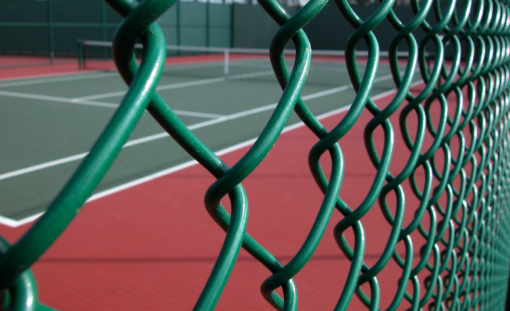
Fencing is an important part of many tennis court projects. It helps contain tennis balls and can provide a defined boundary around the playing area.
The fencing should be planned alongside the court rather than added without considering the overall layout. Gate positions, access and the surrounding space should all be taken into account.
Adding the Tennis Net and Court Markings
Once the main surface has been completed, the court can be finished with the appropriate line markings, net posts and tennis net.
Court markings need to be accurately positioned and clearly defined so that the completed court is ready for play. The finishing stage should complement the underlying construction rather than simply focusing on appearance.
Why Professional Construction Matters
A tennis court needs to perform consistently across its entire playing area. Small construction problems can affect drainage, surface levels and long-term durability.
Professional tennis court construction involves coordinating ground preparation, drainage, surfacing, fencing and finishing details as part of one overall project. This helps ensure that the different elements work together rather than being treated as separate tasks.
Maintaining a New Tennis Court
Even a well-constructed tennis court benefits from regular care. Keeping the surface clean, checking drainage and addressing minor defects promptly can help preserve its playing characteristics.
The maintenance requirements will depend on the type of surface installed and how frequently the court is used. Establishing an appropriate maintenance routine from the outset can help keep the court in good condition.
Tennis Court Construction in Surrey, UK
A new tennis court requires careful consideration from the initial site assessment through to the final surface and markings. Ground preparation, drainage and surface selection are particularly important because they influence how the court performs over time.
Tennis Court Construction Surrey provides tennis court construction services in Surrey, UK, with projects planned around the characteristics of the site and the intended use of the finished court.
Conclusion
Building a new tennis court involves considerably more than installing a playing surface. Proper site preparation, drainage, foundations, surfacing, accurate dimensions, fencing and finishing all contribute to a functional and enjoyable court.
If you are considering a new tennis court in Surrey, UK, contact Tennis Court Construction Surrey to discuss your requirements and arrange an assessment of your proposed project.
Call us on: 01306 771498
Click here to find out more about Tennis Court Construction Surrey
Click here to complete our contact form and see how we can help with your tennis needs.